I open my bag and can’t find what I need. That small panic has ruined plenty of mornings.
I used to dig through chargers, receipts, and snacks. Now I pack so the things I use most sit where I can grab them fast.
It makes checkpoints and layovers calm. Really.
How to Organize Travel Bag Essentials For Quick Access And Convenience
I’ll show the layout I use when travel days feel rushed. You’ll get a clear sense of where things live and why. The result: faster moves through airports, calmer bus rides, and a bag that behaves.
What You’ll Need
- 1L Clear TSA Toiletry Bag (zip-top, PVC)
- Small Neoprene Electronics Organizer (8×5", black)
- Slim Leather Passport Wallet (brown, RFID-blocking)
- Medium Packing Cube (nylon, 10x6x3, blue)
- Foldable Nylon Tote Bag (lightweight, navy)
- Zip-Top Document Pouch (water-resistant, clear front)
- Mini First-Aid Kit Pouch (compact, red)
Step 1: Decide What Lives in Your "Easy-Grab" Pocket
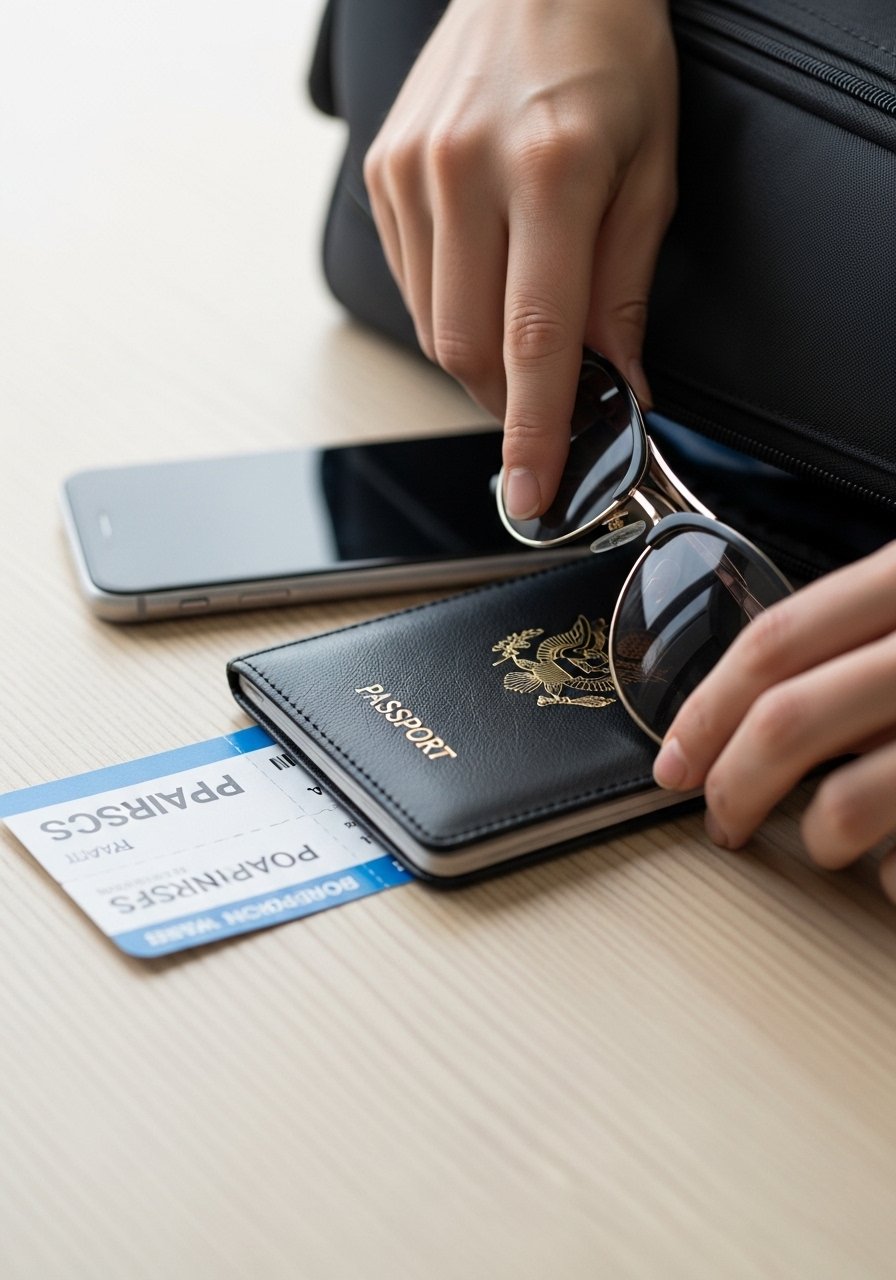
I pick the things I reach for in the first ten minutes off a plane or out of a taxi. Passport, phone, boarding pass, keys, sunglasses. They go in the outer pocket or a slim passport wallet so I don’t unzip the whole bag.
What changes: I open the bag less. I move faster through lines. People miss that “first ten minutes” rule — you don’t need everything at arm’s length, just the things that start the trip.
Small mistake to avoid: stuffing the pocket so full you can’t close it. It should sit flat and still be reachable.
Step 2: Group by When You Use It (Arrival, In-Flight, Day-Out)
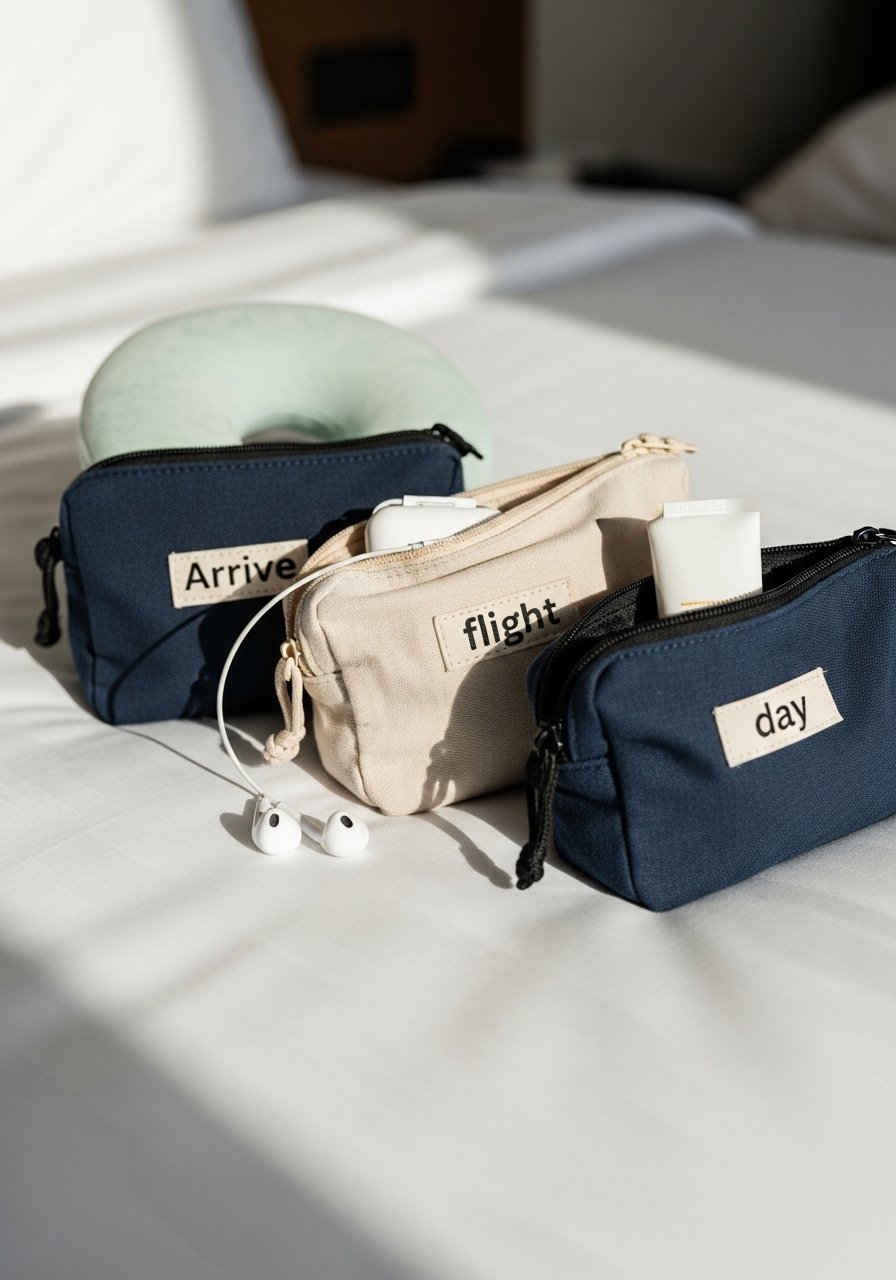
I sort items into three mental groups: arrival (hotel key, local cash), in-flight (earbuds, lip balm, book), and day-out (snack, compact sunscreen, map). Each group lives in its own pouch so I grab the right pouch for the moment.
What changes: less decision fatigue at each phase. I don’t pull out my entire bag to find one thing. Many travelers miss that timing matters more than strict categories.
Mistake to avoid: making groups too fine-grained. Three simple groups cover most trips and keep the system usable.
Step 3: Use See-Through Pouches for Documents and Toiletries
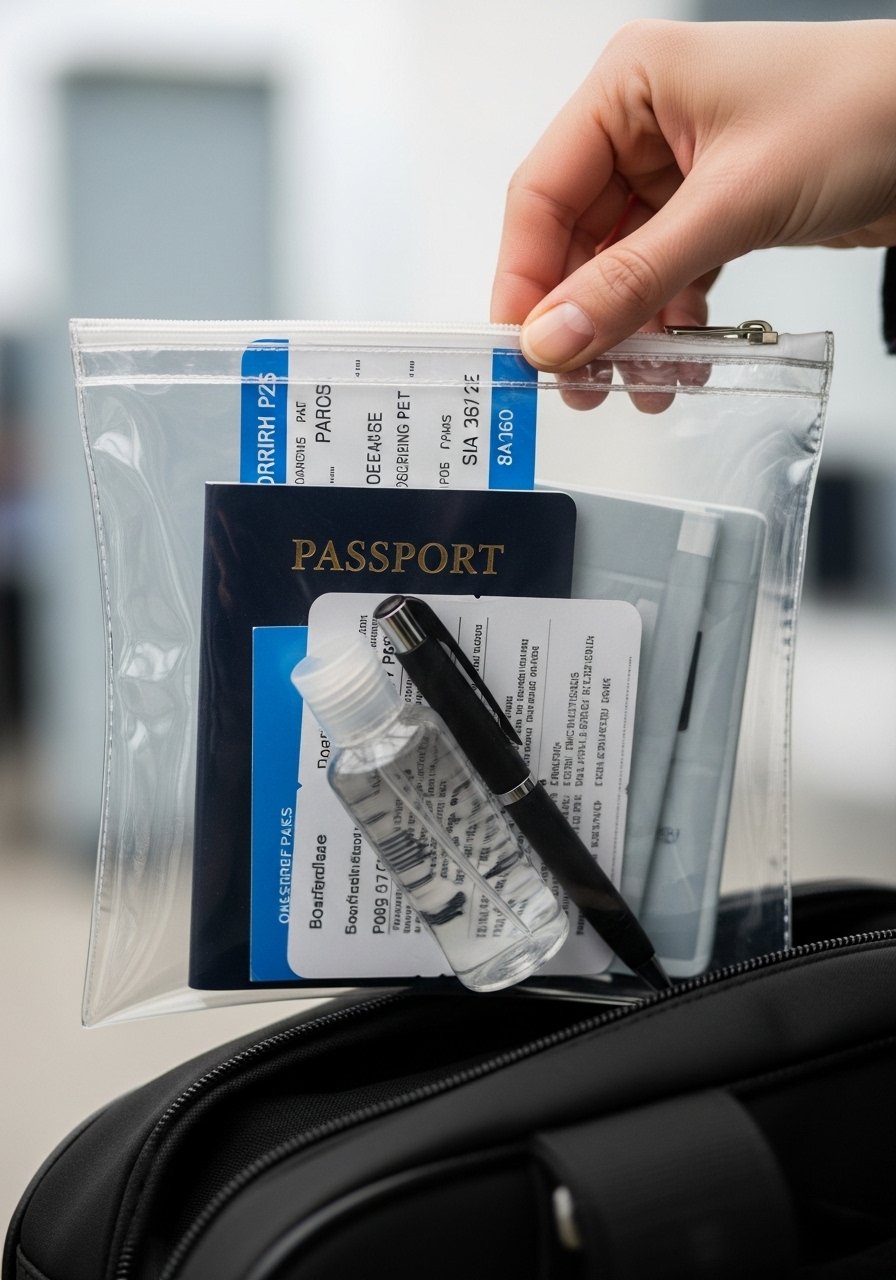
I keep documents and small liquids in clear zipper pouches. TSA and border checks are faster. I can also confirm I packed the right meds or the spare SIM without rummaging.
What changes: fewer surprises at checkpoints. You can spot a missing item in seconds. A common insight: seeing the things reduces anxiety more than hiding them behind fabric.
Mistake to avoid: overfilling the clear pouch with unrelated items. Keep it for papers and compliance items only.
Step 4: Chain Electronics in One Neoprene Organizer
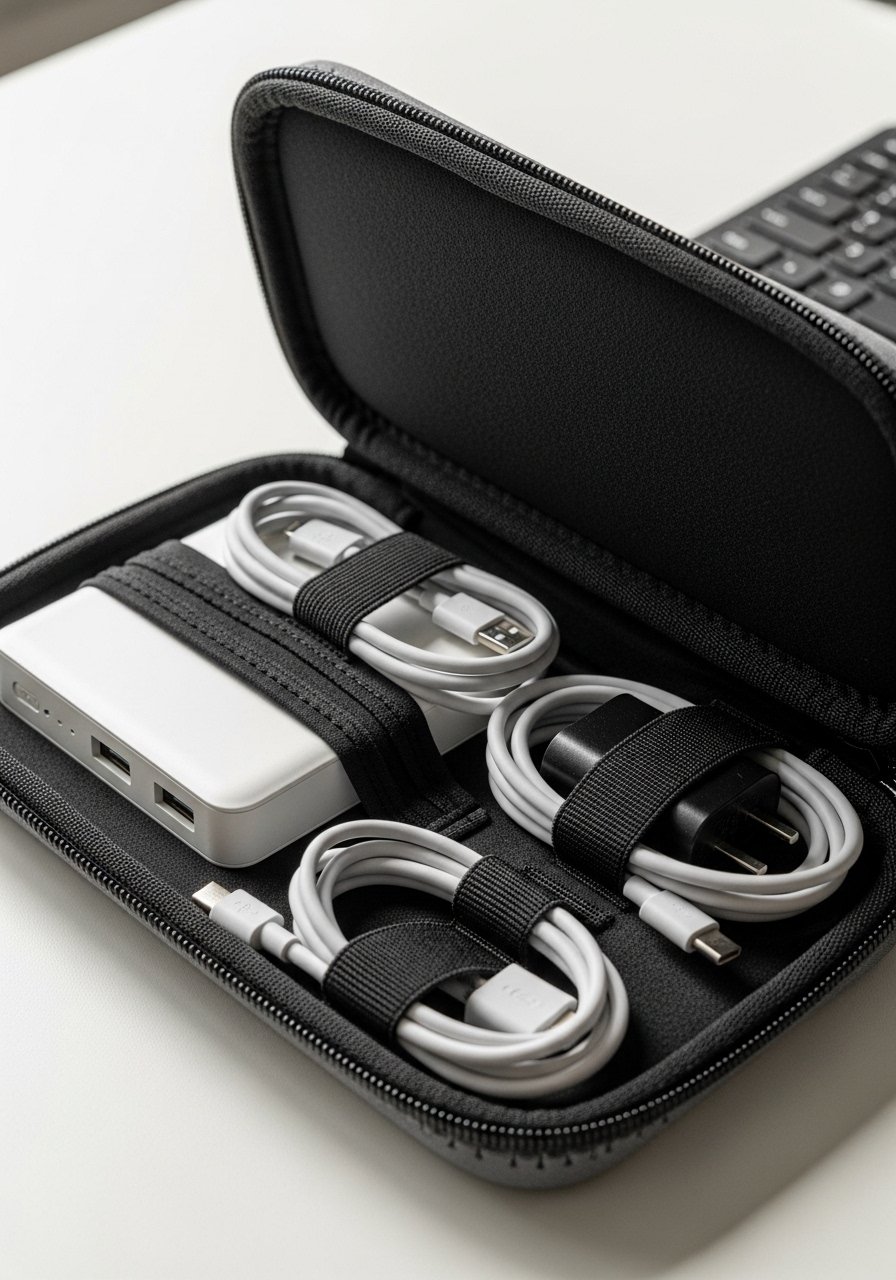
I put chargers, a compact power bank, and spare cable in one small neoprene organizer. Cables stay untangled. When I need to charge, I pull the whole organizer out and set it on a table.
What changes: faster charging stops and less panicked digging when devices hit 10%. People often keep chargers scattered — that’s when things go missing.
Mistake to avoid: carrying every cable you own. Bring the ones that power your main devices and one spare.
Step 5: Test the Flow Before You Close the Bag
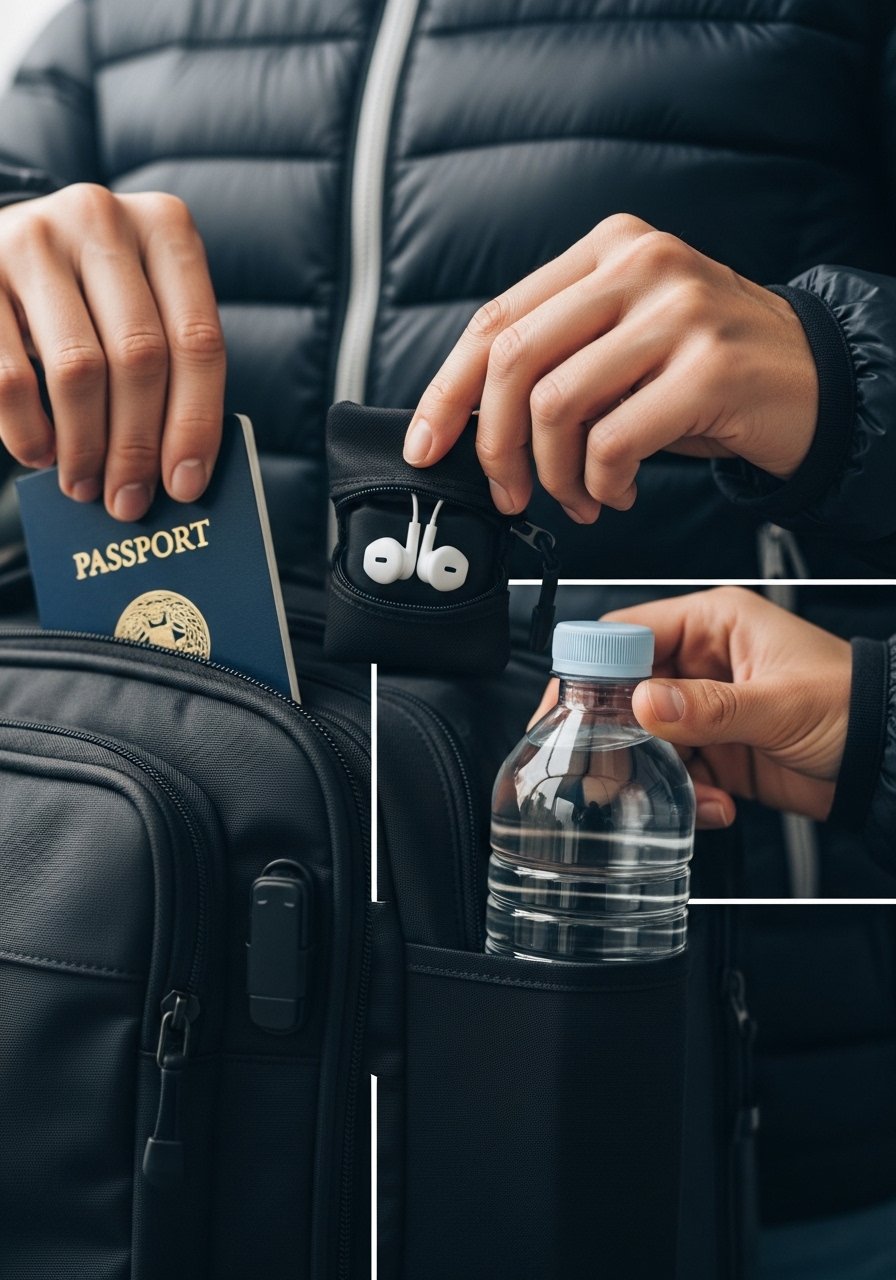
Before I zip, I run a quick “act out” of the trip: pretend I’ve landed, go through security, or step onto a bus. I reach for the items in sequence. If a pocket doesn’t feel easy, I move something.
What changes: you fix awkward setups before you’re stressed. The big insight: organization should be tested in motion, not just in theory.
Mistake to avoid: over-optimizing for a single scenario. Test the flow for the entire first half-day of travel.
What This Solves
This setup cuts the little frictions that add up: slow security, frantic catches for transfers, and ruined coffee over receipts. It doesn’t make packing rigid; it makes action simpler.
You’ll spend less time digging and more time steadying yourself in new places. That steady feeling matters more than having a perfect label on every pouch.
Quick Choices for Different Trip Types
For short city trips I prioritize the outer pocket and day-out pouch. I carry the foldable tote for purchases and keep the packing cube minimal.
For longer trips I let a medium packing cube hold clothes, and keep the electronics organizer and document pouch on top. On active trips I add a small first-aid pouch to the easy-grab zone.
- Business travel: slim passport wallet and pen.
- Beach trips: sunscreen in day pouch, waterproof phone bag.
- Multi-city: duplicates of small essentials across bags.
Keeping It Fresh: Repacking On The Road
I do a five-minute sweep when I switch hotels. I empty the arrival pouch and refill it with local cash and new keys. I also check the electronics organizer and replace any frayed cable.
On longer trips, small changes creep in. Every third day I reassess what’s slowing me down. Swap or remove to keep the system working.
Simple maintenance keeps the system light and useful, not a chore.
Final Thoughts
Start small. Pick two pockets and a pouch and use them for a weekend. You’ll notice the time you save almost immediately.
Stay practical. The goal is calm motion, not perfect labeling. Adjust as you go.
When your bag behaves, travel feels a little kinder.